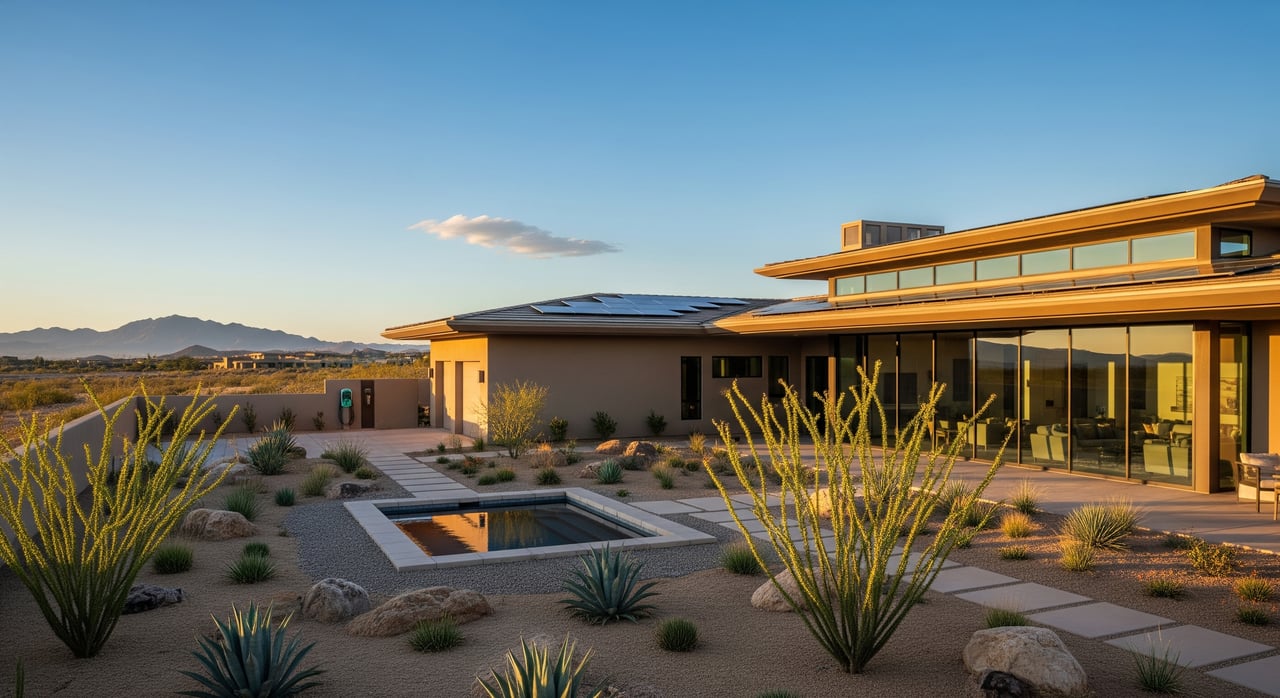
Thinking about a Mesa del Sol home with solar panels? You are not alone. In this golf-adjacent Yuma community, many listings highlight solar to promise lower electric bills and predictable costs. The key is knowing what you are actually buying and how it affects value, financing, and your day‑to‑day bills. In this guide, you will learn the differences between owned and leased solar, what lenders and appraisers look for, and the documents you should request before making an offer. Let’s dive in.
Owned vs. leased solar: what it means
Owned systems
When the system is owned, the panels and equipment are part of the property. You benefit directly from the electricity produced and, after payback, long‑term savings can be substantial. Warranties from the manufacturer and installer usually transfer to you, as long as paperwork is in order. For a clear primer on ownership models, review the SEIA consumer guidance.
Pros:
- You acquire an asset tied to the home.
- Typically simpler for appraisers, lenders, and resale.
- You keep all bill savings, subject to system performance and utility rates.
Watchouts:
- If financed, confirm any lien or loan payoff and get a lien release at closing.
- Check inverter age and roof condition, since replacements add cost.
Leased or PPA systems
With a lease or power purchase agreement, a third party owns the panels. You pay a monthly lease fee or a price per kWh. Contracts often require the new owner to qualify for transfer, and some include fees or buyout options. Savings depend on the gap between your utility rate and the lease or PPA price and can change over time. SEIA’s Arizona policy overview explains the third‑party ownership landscape.
Pros:
- Lower upfront cost to the original owner.
- In some cases, production guarantees or service coverage.
Watchouts:
- Transfer may require credit approval, added paperwork, or fees.
- Lenders may treat the lease as an obligation that affects loan approval.
- If the contract has escalators, long‑term savings can shrink.
Hybrid setups and batteries
Some homes mix ownership types, such as owned panels with a leased battery. Batteries can add value under time‑of‑use or demand charges, but ownership and warranty details matter for transfer. Ask for all agreements and warranty documents.
Value, appraisal, and financing
Owned solar tends to support higher resale value when the system is in good condition and comparable sales exist. National studies, including the Lawrence Berkeley National Laboratory’s Selling Into the Sun report, found sale price premiums for owned systems, though results vary by market, system age, and electricity prices.
Appraisers usually treat owned PV as a permanent improvement and may use comparable sales or an income approach based on energy savings. For leased systems, appraisers note the contract as an encumbrance and evaluate its market impact. The Appraisal Institute’s green resources offer context on how energy features are analyzed.
Lenders generally prefer owned systems because they are simpler to underwrite. Some loan programs require additional documentation or even a lease buyout to close. The safest move is to share the solar details with your lender early, so underwriting requirements do not surprise you later.
Due diligence checklist for Mesa del Sol buyers
Documents to request
- Ownership and title: Proof the system is owned or details of any lien. If financed, request payoff info and a lien release at closing.
- Leased/PPA contracts: Full contract, transfer clause, monthly payments, escalators, buyout option and formula, early termination fees, and the solar company’s contact.
- Permits and approvals: Building permits, final inspection sign‑off, and utility interconnection approval.
- Performance data: At least 12 months of production, inverter model and serial numbers, and any shading studies.
- Warranties and maintenance: Manufacturer and installer warranties, whether they transfer, and any service records.
Technical and inspection items
- System age and remaining life; inverter type and age. Inverters often need replacement during a system’s life.
- Roof condition under and around arrays. Confirm proper flashing and that any roof warranty remained valid.
- Code compliance: Labeling, conduit condition, and overall workmanship. Consider a visual check by a licensed home inspector or solar contractor.
- Production vs. expectations: Compare 12‑month output to modeled expectations to spot underperformance.
- Battery details: Ownership, warranty, capacity, and safety systems.
Lease or PPA transfer questions
- Is transfer automatic or is credit approval required? Are there transfer fees?
- If you do not assume the lease, can the seller buy it out? How is the buyout calculated and when must it occur?
- Are payments tied to utility billing or tax assessments that continue after transfer?
HOA, permits, and local code
- Mesa del Sol homes often fall under HOA review. Arizona law limits an HOA’s ability to ban solar, but you should still confirm that the installed system had required architectural approvals and that documents are on file.
- Verify that all permits were pulled and final inspections passed. Unpermitted work can complicate insurance, financing, and resale.
Utility, net metering, and billing
- Confirm the serving utility and current export compensation or net metering policy for that address. Utility rules change and directly affect savings.
- Check for time‑of‑use rates or demand charges that could boost the value of batteries.
- Confirm the system is interconnected and whether any outstanding solar‑related balances exist.
Estimating real‑world savings in Yuma
Yuma’s high solar potential means strong production for well‑sited systems, but actual savings depend on system size, orientation, shading, and your utility’s tariff. Start with 12 months of production data from the seller and compare it to your expected rate plan. For independent estimates, use the NREL PVWatts Calculator to model output for the property’s location and roof configuration.
Practical tip: Map annual production against your likely time‑of‑use schedule. If peak pricing is high, a battery can increase savings, as long as ownership and warranties transfer cleanly.
Incentives and tax credit basics
If the system is already installed, the original owner likely claimed any available incentives. You should not assume you can claim a federal tax credit on an existing system you did not purchase. For current federal credit rules, see the IRS page on the Residential Clean Energy Credit. For Arizona‑specific incentives and local rebates that come and go, check the DSIRE database before you budget.
Local tips for Mesa del Sol buyers
- Utility confirmation: Identify the utility for your exact Mesa del Sol address and ask about current export compensation and meter rules. This is a key driver of long‑term savings.
- HOA coordination: Homes along or near the golf course may have stricter visibility guidelines. Confirm HOA approval letters and any conditions.
- Appraisal support: Ask the listing agent for comparable sales with owned solar in Mesa del Sol or nearby Yuma neighborhoods. This helps the appraiser and can support value.
- Timeline planning: If a lease buyout is needed, build extra time into your closing to avoid delays.
Next steps
Before you write an offer, send the solar details to your lender, request complete documentation from the seller, and plan a focused inspection. If you want a neutral estimate of production, use NREL’s PVWatts. For Arizona policy context and third‑party ownership background, review SEIA’s Arizona page. For questions about disclosures, visit the Arizona Department of Real Estate.
If you would like a local guide to compare solar and non‑solar listings in Mesa del Sol and structure a clean offer, reach out to Cece Honaker. We will help you verify documents, coordinate with your lender, and keep your purchase on track.
FAQs
Do solar panels always increase a home’s value in Yuma?
- Not always. Owned systems can add value, but premiums vary with system age, size, condition, utility rates, and comparable sales.
Is a solar lease harder to transfer when buying in Mesa del Sol?
- Often yes. Leases add steps like credit approval or transfer fees, which can narrow the buyer pool unless the transfer is simple and low cost.
What should I request from the seller before making an offer on a solar home?
- Ownership proof, any lease or PPA contract, permits and final inspection, utility interconnection, 12 months of production, and transferable warranties.
How do appraisers treat solar during valuation?
- Owned solar is typically treated as a permanent improvement. Leased systems are noted as encumbrances and their impact depends on market acceptance and terms.
How can I estimate savings for a Mesa del Sol property?
- Use the seller’s production data and the NREL PVWatts Calculator to model output, then compare against your utility’s current rate plan.