Search "Colorado River" right now and you get a bathtub ring. Lake Powell's white mineral stain, Lake Mead's exposed boat ramps, headlines about a river system at its lowest combined storage since before Glen Canyon Dam even existed. If you're weighing a waterfront purchase at Martinez Lake, that's the backdrop you're bringing to the decision, and it's the wrong picture. Not because the crisis isn't real. Because it's happening to a different piece of plumbing than the one that fills the water outside your dock.
I get some version of this question every time a buyer starts looking seriously at riverfront property here: is the lake going to keep shrinking? The honest answer requires untangling two systems that share a name but not much else.
The Headline You've Already Seen
The numbers are genuinely bad upstream. As of mid-July 2026, Lake Powell sat at roughly 3,524 feet of elevation and Lake Mead just under 1,043 feet, a new low for their combined storage that a group of Colorado River researchers say hasn't been matched since 1957, before Lake Powell existed at all. Then on August 24, the Department of the Interior approved a plan cutting Colorado River water deliveries across Arizona, California and Nevada by 1.2 million acre-feet a year for the next two years. Arizona absorbs the largest share of that cut, a roughly 30 percent reduction totaling more than 700,000 acre-feet.
That's the story dominating coverage right now, and it's the one a waterfront buyer is likely to have half-absorbed before ever calling an agent. What it describes is the mainstem storage system: the two giant reservoirs that regulate the entire river and the hydropower infrastructure built into their dams. Martinez Lake isn't part of that system. It's downstream of it in a way that changes the entire calculation.
Two Different Rivers, Same Name
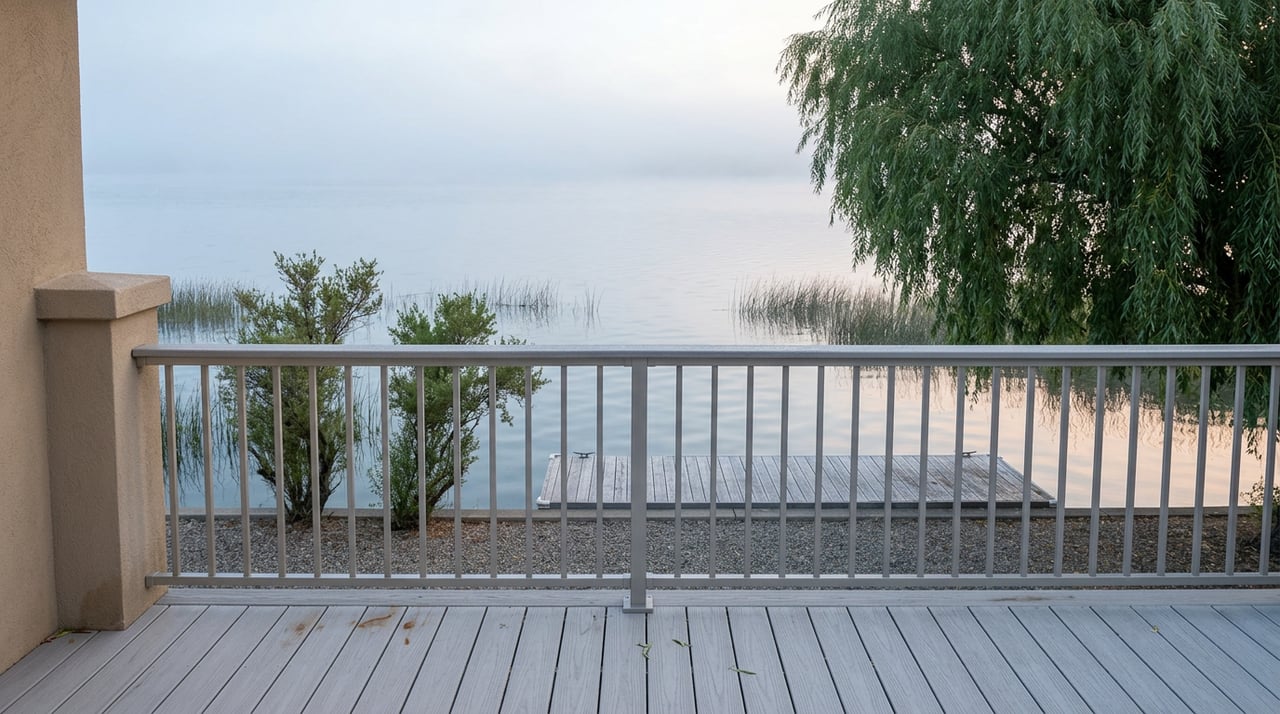
Martinez Lake exists because of Imperial Dam, completed in 1938 as a diversion structure roughly 20 miles north of Yuma. It didn't create a reservoir in the Lake Mead sense. It raised the river's surface enough to push water into the All-American and Gila Gravity Main canals, and in the process it formed a shallow backwater about half a mile by three-quarters of a mile, sitting eight miles above the dam itself. That backwater is Martinez Lake. It has always averaged around 10 feet deep and always will, reedy and shallow by design, not by drought.
The lake's day-to-day water level isn't set by how much water sits in Lake Mead. It's set by daily release schedules out of Parker Dam upstream, the structure that regulates Lake Havasu. Fisher's Landing Resort, which has operated on this stretch of river since 1948, tells its own boaters as much on its site: releases from Parker Dam take about two days to reach this part of the river. That's a fundamentally local, managed system, adjusted on a rolling basis to meet downstream delivery obligations, not a mirror of the mainstem crisis.
Martinez Lake doesn't drop because Lake Mead drops. It rises and falls on a release schedule set two days upstream at Parker Dam, one built to keep water moving to the canals, not to store it the way Powell and Mead do.
That distinction matters more than most drought coverage lets on, because it means the thing making national news and the thing filling your cove are governed by different rules entirely.
Why Yuma's Water Rights Are Older Than the Panic
There's a second layer here, and it has less to do with hydrology than with paperwork written a century ago. Yuma-area irrigation districts, including Welton-Mohawk, Yuma, North Gila Valley and Unit B, hold what water attorney Wade Noble describes as priority three rights on the Colorado River, among the oldest entitlements anywhere on the system. These are Present Perfected Rights dating to the 1922 Colorado River Compact, and they sit well ahead of the junior agricultural contracts in central Arizona that absorb the deepest cuts when shortages hit.
That protection isn't absolute. In comments filed with the Bureau of Reclamation in March 2026, attorney Ben Horwich, who represents four Yuma-area irrigation districts, warned that "the impacts of water reductions to Yuma would be especially severe" if the federal framework didn't properly weigh the region's reliance on the river, since agriculture makes up roughly two-thirds of the local economy. His point wasn't that Yuma is invulnerable. It's that Yuma is legally shielded from the kind of shortage-sharing that hits junior users first, even while carrying real exposure if the whole system keeps declining.
The City of Yuma made a similar case in its own March 2026 comments to Reclamation, pressing for protection of the priority system and pointing out something worth sitting with: Yuma has no groundwater backup. The Colorado River is the only municipal water source the city has. Senior rights buy protection from being first in line for cuts. They don't buy immunity from a river system in long-term decline.
What the August Announcement Actually Changes Locally
The new cuts approved on August 24 land on that same priority structure. Dr. Ali Mohammed of the Yuma-area Agriculture Center told local reporters he expects the region to come out ahead of the statewide average precisely because of that seniority, noting that the seven local water districts have senior rights that should soften the blow relative to the 30 percent hit Arizona faces overall. The Yuma County Agricultural Water Coalition, coordinated by Meghan Scott, has said local water leaders are still waiting on the specific numbers that will apply district by district.
Here's a simple way to hold both halves of this story at once:
| What's absorbing the crisis directly | What's structurally buffered in Yuma |
|---|---|
| Lake Mead and Lake Powell storage and hydropower output | Senior priority 3 / Present Perfected water rights on Yuma-area irrigation districts |
| Central Arizona junior CAP agricultural contracts | Parker Dam's managed daily releases that fill Martinez Lake regardless of Powell/Mead elevation |
| States renegotiating post-2026 operating rules for the mainstem reservoirs | Yuma's natural depth and shoreline, unchanged by upstream storage levels |
What This Means If You're Comparing Waterfront Options
None of this means due diligence stops at "senior rights, don't worry about it." It means asking better questions than the headlines invite. If you're comparing a Martinez Lake property to other waterfront options, the mechanism above should shape what you actually check.
Ask about the water source for the property itself, not just the lake outside it. Martinez Lake Resort, which has operated since 1955, runs its own Shepard Water Company for the resort and surrounding lots. A private well, a resort utility, or a rural water association each carry different long-term considerations than a municipal connection, and that's a separate question from whether the lake itself will hold water.
Ask your inspector or a local marina operator about typical seasonal depth swings, not drought swings. Martinez Lake's shallow, reedy character is permanent. Bass fishing here peaks from October through April specifically because of that shallow structure, not despite it. A boat that needs real clearance was never going to glide over the shoreline near Imperial National Wildlife Refuge, crisis or no crisis.
And when you do want the bigger picture on river policy, go to the source rather than the headline. The Bureau of Reclamation publishes its actual delivery framework and priority tables, and the Yuma City Council's comment letter to Reclamation lays out exactly what the city is arguing for on the municipal side. Both are public documents, and both will tell you more than a photo of a bathtub ring ever will.
A Few Direct Questions
Does the Colorado River crisis mean Martinez Lake could dry up? No credible source is projecting that. The lake's level is tied to managed Parker Dam releases that continue regardless of Lake Mead or Lake Powell elevation, since those releases serve ongoing delivery obligations downstream, not lake storage.
Will the August 2026 cuts raise water costs in the Martinez Lake area? That depends on the district and utility serving a specific property, and district-level allocations were still being finalized as of late August 2026 according to local water officials. Ask about the specific water provider for any property you're considering rather than assuming a regional average applies.
Is Yuma completely protected from future Colorado River shortages? No. Senior priority rights mean Yuma is positioned better than junior users elsewhere in Arizona, but local officials and the city itself have been explicit that the region still carries real exposure if the broader river system keeps declining, especially given that Yuma has no groundwater alternative to the river.
If you're serious about a waterfront property at Martinez Lake and want someone who reads these filings as closely as the listings, that's exactly the kind of homework I do before I ever send you a showing. Cece Honaker has spent years in this specific stretch of river and knows which questions actually matter here. Reach out and let's talk through what you're looking at.